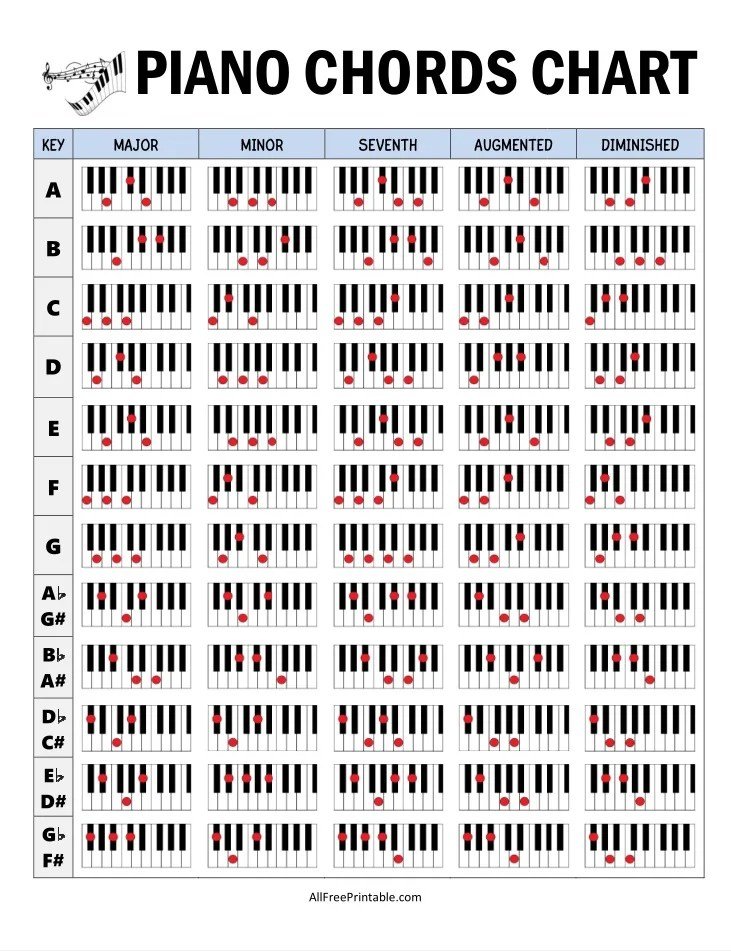
From the very first piano chord, "Worth It All" captures a profound sense of surrender and devotion, resonating deeply with countless listeners and worshipers. If you've felt that pull and are ready to unlock the beauty of "Worth It All" Piano Chords & Lead Sheet on your instrument, you've come to the right place. This isn't just a guide; it's your comprehensive roadmap to mastering the nuances of this powerful song, ensuring you play with both technical accuracy and heartfelt expression.
At a Glance: Your Quick Start Guide to "Worth It All"
- Two Common Keys: Be aware that "Worth It All" is widely played in two primary keys: C# minor (relative to E major) and F# minor (relative to A major). We'll cover both.
- Focus on Dynamics: The song builds and recedes, so dynamics are crucial for emotional impact.
- Voicing Matters: Moving beyond simple root-position chords will elevate your sound significantly.
- Lead Sheet Beyond Chords: Understand how to interpret melody cues and rhythmic notations for a richer performance.
- Practice in Sections: Break the song down into intro, verse, chorus, bridge, and tag for focused learning.
- Listen Actively: Internalize the original recording's feel, rhythm, and chord transitions.
The Heart of "Worth It All": Why This Song Resonates
"Worth It All" isn't just a collection of notes; it's a journey of faith, articulating a complete surrender to a higher purpose. Its lyrical depth and dynamic musical structure have made it a staple in contemporary worship, but its emotional arc also speaks to anyone reflecting on what truly matters in life. As a pianist, your role is to convey this profound message, guiding listeners through moments of tender reflection to soaring declaration. Understanding the song's spiritual core will inform every chord choice and dynamic shift you make, transforming your performance from mere notes into a moving experience.
Navigating the Keys: Understanding "Worth It All"'s Two Main Flavors
Here’s where things get interesting (and why you’re glad you found this guide!). Unlike many songs with a single widely accepted chord chart, "Worth It All" is commonly performed and charted in two distinct keys: C# minor (often thought of in its relative major, E) and F# minor (relative to A major).
Why the split? It often comes down to vocal range suitability for different worship leaders or the instrumentation of a particular band. A song might be written in one key but then transposed to another to better fit a vocalist's sweet spot or to make it easier for guitarists to play with a capo. For piano players, this means you need to be versatile or, at the very least, aware of which version you're looking at.
Choosing your key will depend on:
- The vocalist: What key best suits their voice?
- Other instruments: Are there guitarists with capos, or other keyboardists who prefer a certain key?
- Your comfort: Do you find playing in E major/C# minor more intuitive, or A major/F# minor?
- The specific version you’re trying to emulate: Listen to the recording you love most and identify its key.
Don't worry, we'll walk through both extensively, giving you the tools to play "Worth It All" no matter which key you choose. For a broader overview of how worship songs are structured, you might find our main guide on Worth It All Chords helpful.
Decoding the C# Minor Version (Relative to E Major)
This version often feels slightly darker, more contemplative, especially in its verses, before opening up into a powerful chorus. The key of C# minor shares its key signature with E major (four sharps: F#, C#, G#, D#).
Essential Chords in C# Minor
For this version, you'll primarily be working with:
- C# minor (C#m): The tonic minor chord, home base.
- A major (A): The subdominant (IV) chord of E major, or the VI chord of C# minor.
- E major (E): The relative major, and often feels like a secondary home.
- B major (B): The dominant (V) chord of E major.
- B/D#: A B major chord with D# in the bass, adding a strong leading-tone feel into E.
- E/G#: An E major chord with G# in the bass, creating a smooth bass line movement.
Chord Chart Breakdown: "Worth It All" in C# Minor
Here's a section-by-section breakdown. Remember, these are the basic chord symbols. We’ll discuss voicings shortly to make them sound rich.
(Key: C# Minor / E Major)
Intro
C#m / A / | E ///
C#m / A / | E ///
Verse 1
C#m All I Aam Lord E here before You
C#m Reaching Aout for moreE
C#m You're the Apromise Enever B/D#failing
C#m You are Amy reEward
C#m You are Amy reEward
Chorus
I let Ago of all I Ehave just to C#mhave all of BYou
And no Amatter what the Ecost I will C#mfollow BYou
Jesus Aeverything I've Elost I have C#mfound in BYou
When I Afinally reach the C#mend I'll Bsay
Tag 1
You are worth it all C#m / A / | E ///
Verse 2
C#m There's no Ariches E earthly treasure
C#m That will AsatisfyE
C#m Every Alonging Efor You B/D#Jesus
C#m Set this Aheart on Efire
C#m Set this Aheart on Efire
Chorus (Same as above)
Tag 2
You are worth it all A / C#m / | B ///
You are worth it all A / C#m / | B ///
Bridge 1
A When I'm there in Your glorious E/G#presence
B Every knee is bowed beC#mfore You
A Hear the sound of heaven E/G#singing
BYou are worth C#mit all
A All the saints cry holy E/G#holy
B Angels singing worthy C#mworthy
A Forever I will shout Your E/G#praises
BYou are worth C#mit all
Bridge 2 (Slight variation, often building intensity)
A When I'm there in Your glorious E/G#presence
B Every knee is bowed beC#mfore You
A Hear the sound of heaven E/G#singing
BYou are worth C#mit all
A All the saints cry holy holy
A/C# Angels singing worthy C#mworthy (Note the A/C# here instead of A)
A/C# Forever I will shout Your praises (Note the A/C# here instead of A)
B/D#You are worth it all A / C#m / | B ///
You are worth it all A / C#m / | B ///
Ending
You are worth it all A / C#m / | B ///
Voicing Strategies for C# Minor
Playing block chords in root position (e.g., C#m: C#-E-G#) can sound clunky. For a polished piano sound, focus on smooth voice leading and inversions.
- Left Hand (LH): Typically plays the root of the chord, often as an octave (e.g., C#-C#). For bass notes like B/D# or E/G#, your LH plays the specified bass note.
- Right Hand (RH): Plays the chord, often in an inversion that minimizes hand movement from the previous chord.
- C#m: C#-E-G# (root), E-G#-C# (1st inv), G#-C#-E (2nd inv)
- A: A-C#-E (root), C#-E-A (1st inv), E-A-C# (2nd inv)
- E: E-G#-B (root), G#-B-E (1st inv), B-E-G# (2nd inv)
- B: B-D#-F# (root), D#-F#-B (1st inv), F#-B-D# (2nd inv)
Example Progression (Chorus start):
A (RH: E-A-C#) -> E (RH: G#-B-E) -> C#m (RH: G#-C#-E) -> B (RH: F#-B-D#)
Notice how each chord shifts by only one or two notes, creating a much smoother, professional sound.
Rhythm and Feel in C# Minor
The C# minor version often maintains a driving, consistent rhythm, especially in the chorus and bridge.
- Verses: Can be more understated, with sustained chords or light arpeggiation.
- Chorus/Tags: Fuller, more rhythmic chords, often playing on the beat or with slight syncopation to give it drive.
- Bridge: Builds significantly, with heavier, more insistent chords and a strong rhythmic pulse.
Practice slowly with a metronome, focusing on hitting the chords precisely on the beat. Once comfortable, add subtle rhythmic variations.
Decoding the F# Minor Version (Relative to A Major)
This alternative key offers a slightly brighter, yet still introspective, feel. F# minor shares its key signature with A major (three sharps: F#, C#, G#).
Essential Chords in F# Minor
For this version, your primary chords will be:
- F# minor (F#m or F#m7): The tonic minor chord. F#m7 adds a richer texture.
- D major (D or D2): The subdominant (IV) chord of A major, or the VI chord of F# minor. D2 (D-E-F#-A) adds an E for color.
- A major (A): The relative major, a strong anchor.
- E major (E): The dominant (V) chord of A major.
- A/C#: An A major chord with C# in the bass, creating a moving bass line.
- E/G#: An E major chord with G# in the bass, providing smooth transitions.
Chord Chart Breakdown: "Worth It All" in F# Minor
Here's the section-by-section breakdown for this version:
(Key: F# Minor / A Major)
Intro
F#m7 D A
Verse 1
F#m7 D2 A
All I am Lord, here before You
F#m7 D2 A
Reaching out for more
F#m7 D2 A
You're the promise never failing
F#m7 D2 A
You are my reward, Jesus, You are my reward
Chorus
D A F#m E
I'll I let go of all I have just to have all of You
D A F#m E
And no matter what the cost, I will follow You
D A F#m E
Jesus ev'rything I've lost I have found in You
D A E
When I fin'lly reach the end I'll say
Tag 1
F#m7 D A
You are worth it all
Tag 2 (Often repeats with building intensity)
D F#m E
You are worth it all
D F#m E
You are worth it all
Verse 2
F#m7 D2 A
There's no riches or earthly treasure
F#m7 D2 A
That will satisfy
F#m7 D2 A
Ev'ry longing for You Jesus
F#m7 D2 A
Set this heart on fire
F#m7 D2 A
Set this heart on fire
Chorus (Same as above)
Bridge
D A/C#
When I'm there in Your glorious presence
E F#m
Ev'ry knee is bowed before You
D A/C#
Hear the sound of heaven singing
E F#m
You are worth it all
D A/C#
All the saints cry holy holy
E F#m
Angels singing worthy worthy
D D/F# A/C#
Forever I will shout Your praises (Note D/F# variation)
E A/C#
You are worth it all
Ending
E/G# D F#m E
You are worth it all
D F#m E
You are worth it all
F#m7 D A
You are worth it all
Voicing Strategies for F# Minor
Similar to the C# minor version, smooth voice leading is key.
- Left Hand (LH): Plays the root or specified bass note (e.g., A/C#, E/G#).
- Right Hand (RH): Plays chord inversions for smooth transitions.
- F#m7: F#-A-C#-E (root), A-C#-E-F# (1st inv), C#-E-F#-A (2nd inv), E-F#-A-C# (3rd inv) – use inversions that make sense.
- D/D2: D-F#-A (root), F#-A-D (1st inv), A-D-F# (2nd inv). For D2, add E to any of these voicings.
- A: A-C#-E (root), C#-E-A (1st inv), E-A-C# (2nd inv)
- E: E-G#-B (root), G#-B-E (1st inv), B-E-G# (2nd inv)
Example Progression (Chorus start):
D (RH: F#-A-D) -> A (RH: E-A-C#) -> F#m (RH: C#-F#-A) -> E (RH: B-E-G#)
Again, notice the minimal movement between chords for a flowing sound.
Beyond the Basic Chords: Elevating Your Play
Once you have the fundamental chords down, it's time to add polish and personality to your performance.
1. Chord Substitutions and Extensions
For a richer, more professional sound, consider adding extensions or making subtle substitutions:
- Minor 7ths (m7): You'll see F#m7 already in the F# minor version. Apply this to C#m as well (C#m7 = C#-E-G#-B) for a softer, more jazzy feel.
- Sus4 Chords: On dominant (V) chords, a sus4 can add tension that resolves beautifully. For example, playing a Bsus4 (B-E-F#) before resolving to B in the C# minor version.
- Add9 Chords: Add the 9th (second scale degree) to major chords for a shimmering quality (e.g., Eadd9 = E-G#-B-F#).
- Inversions with Suspended Tones: Sometimes, just holding a note from the previous chord over a new chord creates a 'sus' sound without explicitly being a sus chord. Experiment!
2. Playing with a Band vs. Solo Piano
Your approach changes significantly depending on the context:
- Solo Piano: You're responsible for the entire harmonic, melodic, and rhythmic landscape. Use fuller voicings, incorporate bass lines in your left hand, and consider arpeggiating chords during quieter sections. You might even weave in elements of the vocal melody.
- With a Band: Your role is to support and enhance. Avoid clashing with the bass player by keeping your left hand higher (octave above the bass). Focus on rhythmic chord pulses or pad-like sustained chords. Listen to the other instruments to find your sonic space. If a guitarist is playing open chords, you might play higher inversions to avoid muddiness.
3. Dynamic Control
"Worth It All" is a masterclass in dynamics.
- Verses: Start soft, often pianissimo (pp) or piano (p), building gradually.
- Pre-Chorus: A slight swell, mezzo-forte (mf).
- Chorus: Full, passionate, forte (f) or fortissimo (ff).
- Bridge: Often starts softer, then builds to the absolute peak, sometimes even more powerful than the chorus.
- Tags/Ending: Can either sustain the intensity or slowly fade to a quiet, reflective conclusion.
Using the sustain pedal effectively is crucial for smooth transitions and sustaining atmosphere, but avoid overusing it to prevent a muddy sound.
4. Transposition on the Fly (or with Practice)
If you regularly play with different groups, learning to transpose "Worth It All" (or any song) between common keys is invaluable. While beyond the scope of a quick tip, understanding the Nashville Number System or simply practicing the song in both provided keys will build your transposition muscles. Transposing music is a fundamental skill that unlocks incredible versatility for any musician.
Lead Sheet Essentials: More Than Just Chords
A lead sheet is a condensed form of musical notation that provides the essential information needed to perform a song: the melody, lyrics, and harmonic structure (chords). For "Worth It All," it's your blueprint.
What to Look For Beyond Chords
- Melody Line: This is often written on the staff, showing the main vocal melody. Even if you're not singing, understanding the melody helps you know where to place your chords rhythmically and when to add fills.
- Rhythmic Notation: Pay attention to note durations and rests. This dictates when to play your chords and how long to sustain them.
- Dynamics: Look for markings like "p" (piano - soft), "f" (forte - loud), "cresc." (crescendo - gradually getting louder), and "dim." (diminuendo - gradually getting softer). These are vital for conveying the song's emotional journey.
- Tempo Markings: "Andante," "Allegro," or often just a metronome marking (e.g., Quarter Note = 70 bpm) tell you the speed. "Worth It All" generally has a moderate, contemplative tempo.
- Section Markers: Intro, Verse, Chorus, Bridge, Tag, Ending. These help you navigate the song's structure quickly.
Adding Fills and Ornamentation
- Melodic Fills: During instrumental breaks or at the end of vocal phrases, you can lightly echo parts of the melody or improvise short, tasteful lines using notes from the current chord or scale.
- Arpeggios: Instead of block chords, break them into flowing arpeggios, especially in softer sections like the verses.
- Passing Tones: Briefly add notes that aren't in the current chord but connect harmonically to the next, enhancing the melodic flow.
The key is restraint. Fills should serve the song, not distract from it. Listen to the original recording for inspiration on where to place subtle embellishments.
Common Pitfalls and How to Avoid Them
Even seasoned players can stumble. Here are some common traps and how to steer clear:
- Ignoring Dynamics: Playing the entire song at one volume makes it flat. Actively practice the dynamic shifts. Record yourself and listen back critically.
- Sticking to Root Position Chords: While easy for beginners, it sounds amateurish and clunky. Prioritize learning inversions for smooth voice leading.
- Not Listening to the Original Recording (Enough): The nuances of rhythm, dynamics, and feel are best understood by immersing yourself in how the professionals play it. Listen actively, not passively.
- Overcomplicating Too Soon: Don't try to add complex fills and substitutions before you have the basic chord changes and rhythm solid. Master the foundation first.
- Neglecting the Left Hand: The left hand isn't just for bass notes. It sets the rhythmic foundation and can add depth with octaves or simple patterns. Ensure it's working in tandem with your right hand.
- Inconsistent Tempo: Using a metronome is non-negotiable, especially when learning. It builds a solid internal clock.
Practice Smart, Not Just Hard
Learning "Worth It All" on piano is a rewarding journey, but it requires a strategic approach.
- Section by Section: Don't try to play the whole song perfectly from day one. Master the intro, then the first verse, then the chorus, and so on. Connect two sections only when you're comfortable with each individually.
- Slow Practice is Key: Start at a painfully slow tempo. This allows your brain and fingers to connect the correct notes and movements without the pressure of speed. Gradually increase the tempo only when you can play a section perfectly at the slower speed.
- Use a Metronome: This cannot be stressed enough. A metronome provides an objective beat, helping you develop precise rhythm and consistent tempo.
- Play Along with Recordings: Once you're somewhat comfortable, play along with a recording (or a backing track without piano). This helps you internalize the song's feel, timing, and how your part fits into the larger musical fabric.
- Focus on Problem Areas: Don't just play through the easy parts repeatedly. Identify the chords or transitions that trip you up and dedicate extra time to them. Is it that quick B/D# to C#m? Slow it down, loop it, and practice it until it's seamless.
- Record Yourself: It's often painful but incredibly insightful. You'll hear things you miss while playing, like uneven rhythms, rushed transitions, or harsh dynamics.
Frequently Asked Questions About "Worth It All" Piano
Is "Worth It All" hard to learn on piano?
It's moderately challenging. The chord progressions are relatively straightforward, but mastering the dynamic shifts, smooth voicings, and rhythmic precision requires practice. If you're new to inversions, that will be your primary challenge, but it's an excellent song to develop those skills.
What's the best key to play "Worth It All" in?
There's no single "best" key. The C# minor (E major) version is very common in contemporary worship, but the F# minor (A major) version is also widely used. The best key for you depends on the vocalist's range you're supporting, the comfort level of other musicians you're playing with, and your personal preference for the feel of the key. Try playing through the verse in both keys to see which feels more natural.
How do I make my piano sound more like the original recording?
- Listen actively: Pay attention to rhythm, dynamics, and specific chord voicings.
- Use inversions: Avoid block root-position chords.
- Employ the sustain pedal wisely: For smooth transitions and atmosphere, but lift it on chord changes to prevent mud.
- Add subtle fills: Don't overdo it. Just a few well-placed melodic fragments can enhance the sound.
- Layer textures: If playing solo, use both hands to create fuller sounds. If with a band, find your unique space.
Can I use a lead sheet for improvisation?
Absolutely! A lead sheet provides the harmonic framework (chords) and the melodic guide (the tune). With this information, you can improvise fills, create intros/outros, or even craft instrumental sections, as long as you stay true to the underlying harmony and the song's emotional context. Think of the chords as your harmonic "guardrails" within which you can explore.
What are those chords like B/D# or E/G#?
These are called slash chords. The letter before the slash indicates the chord (e.g., B major), and the letter after the slash indicates the bass note that your left hand should play (e.g., D#). They're used to create smooth, stepwise bass lines that add harmonic interest and depth, often leading into the next chord beautifully.
Your Journey to Playing "Worth It All": What's Next?
You now have a solid foundation for approaching "Worth It All" Piano Chords & Lead Sheet, regardless of the key. Remember, music is a journey, not a destination. Take these insights, sit down at your piano, and start applying them. Begin with slow, deliberate practice, focusing on accuracy before speed. Experiment with different voicings and dynamic interpretations. Most importantly, play with heart, letting the profound message of "Worth It All" flow through your fingers. The more you immerse yourself, the more effortless and expressive your playing will become. Enjoy the process of bringing this beautiful song to life!